JD.com Inc., the colossal online retailer of China, has shocked the economic waters with an unprecedented sales explosion—a staggering 13% revenue uptick in the December quarter—catapulting its total to a dizzying 347 billion yuan. Let’s break that down for the unperturbed masses: almost $48 billion, rolled in during three months of what could only be described as a commercial feast. And for those hoping this was a fluke, think again. JD’s net income has doubled. Yes, doubled—so much for economic turbulence.
Beijing’s Economic Alchemy: When Policy Writes Profits
The machinery behind JD.com’s meteoric rise? It’s not magic; it’s Beijing’s aggressive economic re-engineering. The government has tactically injected fuel into consumer spending, engineering incentives like appliance and electronics trade-ins to stimulate household consumption. Add a strategically expanded Singles’ Day shopping season into the mix, and you’ve got a perfect recipe for revenue gluttony.
Of course, this isn’t just a JD.com victory lap. This is a case study in Beijing’s sharp pivot to push a consumption-driven economy, supported by targeted policies that challenge the mounting global economic uncertainty. Are you catching the scale of this movement? The Chinese tech sector isn’t just healing; it’s roaring back to life.
Alibaba and JD: The Rivalry Building a Tech Resurgence
JD’s stellar quarter mirrors its rival, Alibaba, which also posted triumphant figures last month. Could this be the dawn of a ruthless battle between two consumer tech titans? Perhaps. For now, JD sits comfortably as one of Beijing’s golden children in this strategic pivot toward consumption-led growth. Whether they’ll play nice or shred each other for dominance is anyone’s guess.
Unmasking the Policy Puppeteer
Zheng Shanjie, the chairman of China’s National Financial Regulatory Administration, has teased plans for a consumption-boosting “special program.” Translation: the game just changed, and JD.com appears poised to reap further gains. A state fund is also on the horizon to throw yet more weight behind technological innovation, signaling the lethal ambition of a government that refuses to watch from the sidelines.
Tech vs. Logistics: The Evolution of Profit
The latest quarter also marks a fascinating shift for JD. Retail—and not logistics—is once again its profit king, outstripping analyst expectations by a jaw-dropping 15%. Why? The aforementioned “trade-in” bonanza, backed by state policies, positioned JD to gorge on every yuan thrown its way. Spectators are watching closely as tech steps back into the throne.
The Costs of Expansion: A Knife’s Edge
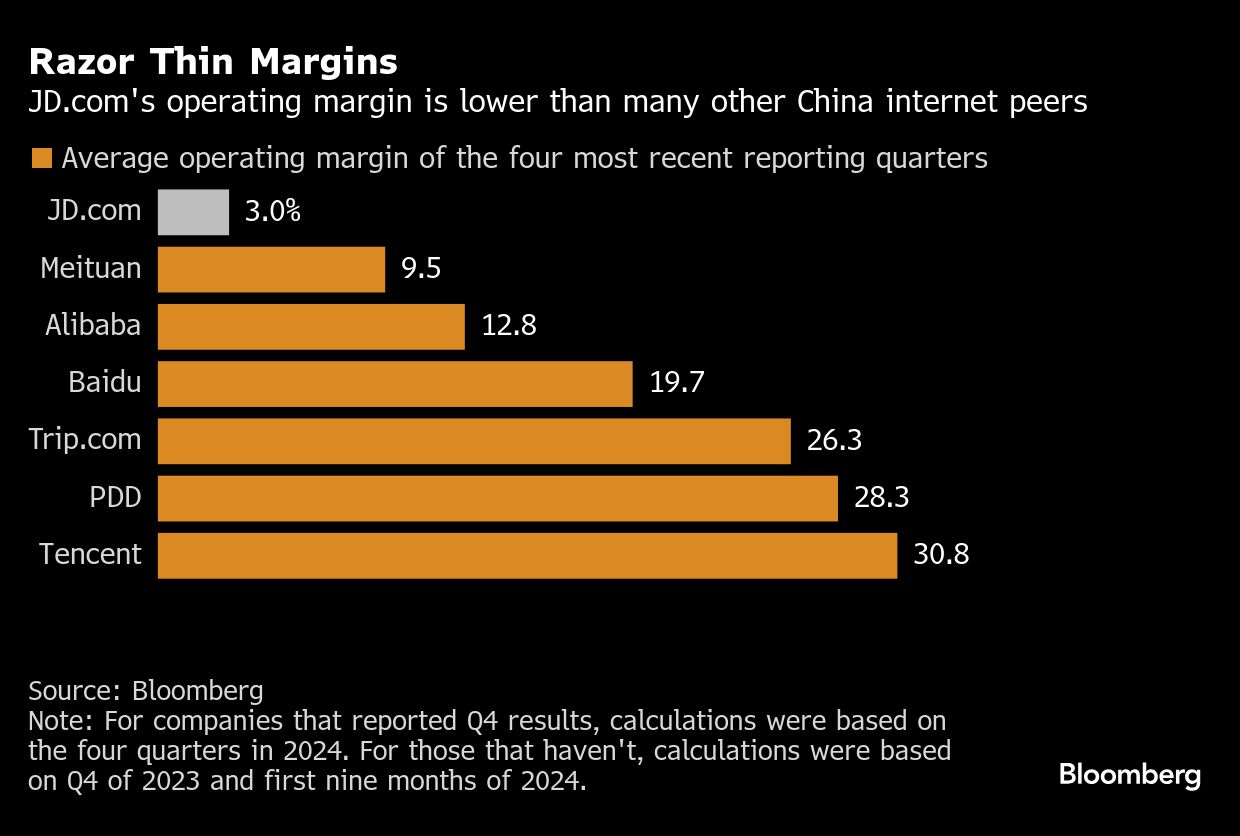
But hold on: not all is smooth sailing. JD launched JD Takeaway, boldly marching into the already fraught battlefield of food delivery. Here’s the catch: they now face ferocious competitors like Meituan, and an unforgiving price war with Alibaba and PDD Holdings Inc. Investors are uneasy, casting a shadow over profitability that, once soaring, now teeters on a sharp knife’s edge.
Despite these concerns, JD keeps its cards close. Executives have sworn allegiance to strategic growth and cost discipline, promising to adapt their expansion pace to minimize collateral damage from competitive warfare.
Deconstructing the Results: A Promising but Perilous Path
Bottom line: the momentum is immense, broad-based, and unapologetically driven by both state incentives and unrelenting corporate adaptation. JD’s wild ride isn’t over, but neither are the risks. Could its aggressive moves into saturated markets like food delivery backfire? Could its profitability take a nosedive amid unrelenting pressure? Only time will tell whether JD nimbly sidesteps competitors’ knives or ends up impaled on them.
Source: finance.yahoo.com/news/jd-com-sales-rise-most-100133420.html