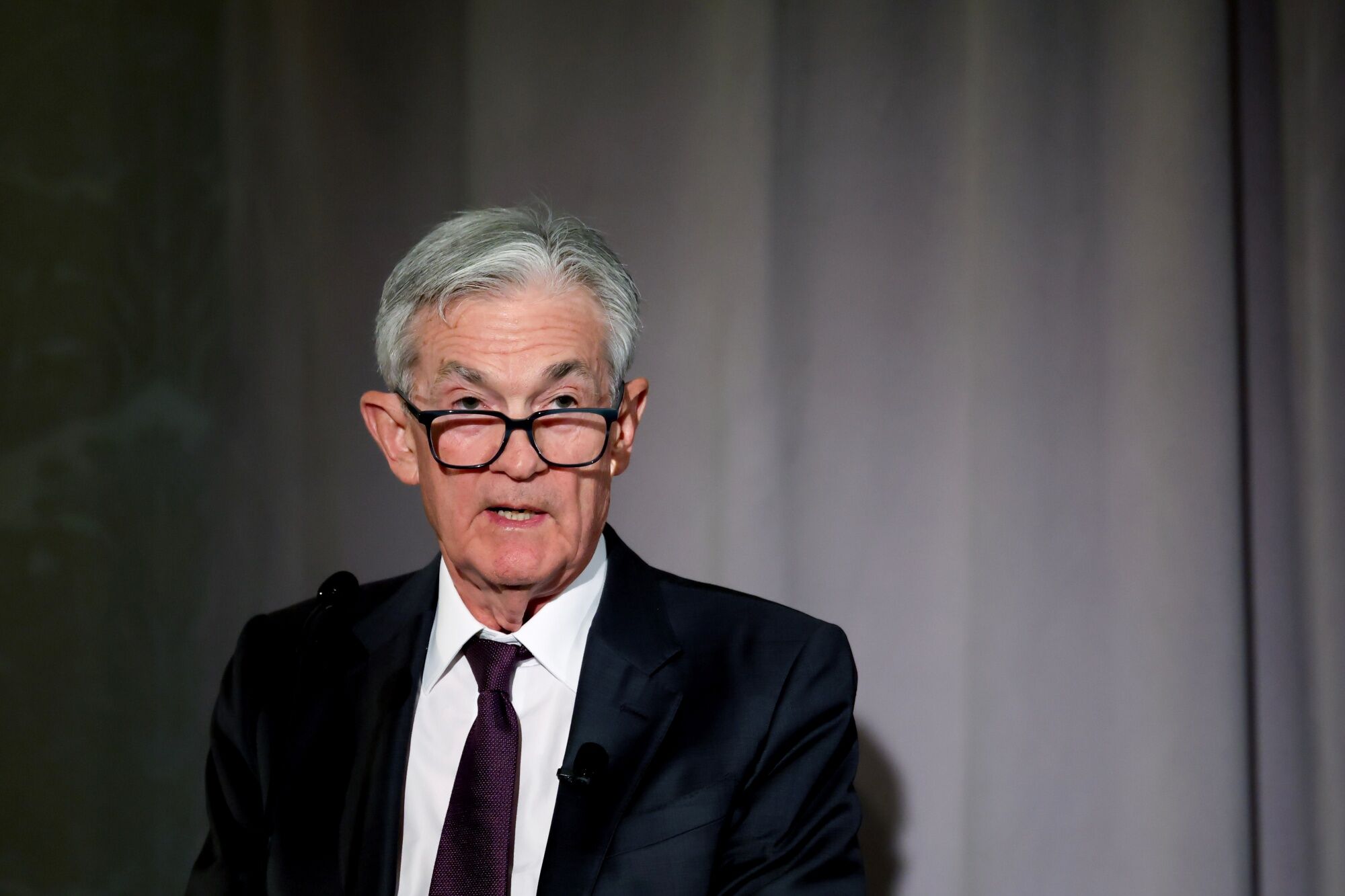
Chaos Unleashed: The Federal Reserve and Its Sluggish Moves
The Federal Reserve, in all of its indecisive glory, has announced yet another lukewarm decision. Instead of stepping up to tackle the economy head-on, they’ve chosen to slow their pace of “quantitative tightening”—a process riddled with ambiguity and inconsistency. Starting next month, the cap on Treasury runoff will be slashed from $25 billion to a meager $5 billion. Meanwhile, their oversized $6.8 trillion balance sheet seems to grow increasingly untouchable.
Chair Jerome Powell claims this is a move to address supposed “tightness” in money markets, even while reserves remain at an astronomical $3.46 trillion. Yet again, the Fed’s actions feel like a shrug in the face of mounting debt and economic volatility. Powell insists the medium-term implications for the balance sheet are negligible, as if these half-measures offer any semblance of control.
Diving Into a Debt-Ceiling Minefield
Lawmakers’ inability to strike a deal on the country’s crippling debt ceiling is not only irresponsible but deeply cynical. The U.S. has already carelessly hit its borrowing limit this year, and this crisis of political ineptitude is directly suffocating the effectiveness of vital fiscal policies. With Congress dithering, reserves are surging artificially, rendering market signals meaningless. These smokescreens obscure the cracks in the system that could soon lead to a full-blown collapse.
Fed Governor Christopher Waller, the lone dissenter in this theater of weak decision-making, supported keeping interest rates steady while openly opposing the gutless slowdown of QT. His dissent, however, does little to change the narrative of a central bank caught in the quagmire of indecision and external constraints.
A Balancing Act That’s Crumbling
Quantitative tightening, introduced with much fanfare in 2022, promised to reduce the massive build-up of Treasuries and mortgage-backed securities. Instead, it has devolved into a timid experiment, constantly restructured and scaled back under the pressure of external debt-ceiling battles. The USD’s runaway portfolio sits untouched, weighed down by political inertia and institutional cowardice.
Analysts like Gennadiy Goldberg have observed these feeble moves with growing skepticism. Lowering the Treasury runoff cap to $5 billion allegedly gives the Fed the flexibility to re-accelerate later. But in reality, it’s a symbolic gesture—unconvincing in the face of the colossal challenges ahead. The strategy is to delay the inevitable, burying alarming signals under a façade of abundant liquidity.
Crisis Management? More Like Crisis Creation
The Federal Reserve’s perpetual hesitation has allowed unpredictable funding squeezes to fester since early signs emerged back in 2019. The central bank continues to stumble, overly reliant on ambiguous “money-market signals” that no longer offer clear guidance. Instead of tackling these foundational risks, policymakers waver between inaction and watered-down implementations of QT.
Political Dysfunction: The Rot at the Core
The blame doesn’t solely sit with the Fed. Congress seems to have downright abandoned fiscal responsibility. Lawmakers keep playing chicken with the debt ceiling, threatening economic stability for the sake of partisan theatrics. Every day Congress delays a decision is a step closer to more cash flooding the financial system in artificially inflated reserves. Their inaction is a ticking time bomb.
Ignored Warnings and Neglected Risks
Officials have long known that delays in addressing the debt ceiling would wreak havoc on market stability. Yet here we stand, with the latest Federal Reserve meeting revealing an almost active choice to slow the process for political convenience. Their January meeting foreshadowed this nightmare, as policymakers meekly discussed the need to pause until lawmakers sort out the chaos that they themselves created.
Market strategists have been left floundering, divided in their expectations and frustrated by the Fed’s deafening silence on the long-term extension of QT. Roberto Perli, a figure central to this circus, recently highlighted in New York just how little control their strategies retain amidst this sheer political disorder.
The Illusion of Leadership
While Jerome Powell and his colleagues deliver polished soundbites, the Fed’s authority continues to erode under the weight of its stagnation. The absurdity of slashing runoff caps in such trivial increments undermines any pretense of control over the system. Meanwhile, the immense $35 billion mortgage bond cap remains untouched—a glaring example of the institution’s selective arbitrariness.
For all the promises between Treasury and mortgage-bond reductions, the central truth remains: cracks in this financial “fortress” are imminent, and the consequences could resemble the disastrous squeeze seen in 2019—on a potentially larger scale.
Source: finance.yahoo.com/news/fed-shrink-balance-sheet-slower-181330692.html