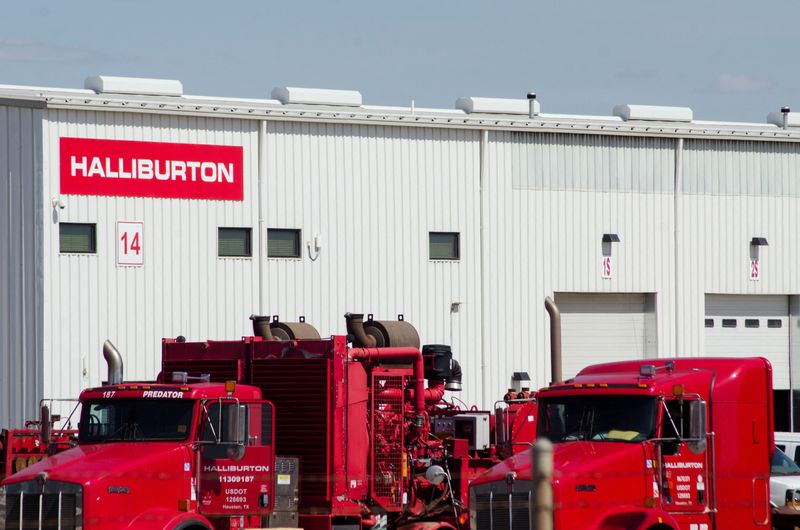
Corporate Manipulation: Halliburton’s Financial Folly
Halliburton, a titan of the U.S. oilfield services industry, has unveiled its latest quarterly results, and the picture is anything but inspiring. Amidst a faltering North American drilling landscape, the company recorded a devastating $356 million pre-tax charge, dragging its first-quarter profit into the gutter. The so-called “Big Three” player in its sector is grappling with reduced demand, proving yet again that even corporate giants are not invincible. What lies beneath these numbers, however, is a tale of economic inefficiency and a shift in global power.
Tariffs and Tactical Errors
Under the shadow of President Donald Trump’s divisive tariffs, the entire oilfield services industry finds itself at a crossroads. Duties on steel imports—a critical component in equipment like drilling rigs and well casings—have disrupted supply chains, effectively driving up costs and further throttling companies already weakened by an insipid U.S. shale industry. Halliburton is merely the first among equals to reveal the damage, but make no mistake: the entire sector is bracing for impact.
North American Decline: Where’s the Growth?
While Halliburton likes to tout its international reach, the North American market paints a bleak picture. First-quarter revenues fell by a jaw-dropping 12%, sinking to a paltry $2.2 billion. With operators cutting drilling budgets to focus on so-called “capital discipline,” demand for rigs has plummeted. But let’s not mince words—these so-called “disciplined” operators are suffocating innovation and hamstringing growth all for the sake of short-term figures that keep Wall Street momentarily happy.
International Wins as a Fleeting Lifeline
In a desperate grasp for stability, Halliburton is leaning heavily on its overseas operations. The Middle East and Asia offered a shred of solace with a 6% revenue increase. CEO Jeff Miller wasted no time spinning this as a victory, crowing about new offshore work that promises revenues stretching through 2026. Nevertheless, even the foreign markets are no ironclad guarantee. Global economic frameworks remain fragile, leaving Halliburton’s international gains vulnerable to future disruptions.
Profit Dive: A Fall from Grace
The numbers are grim, and no amount of corporate spin can mask the truth. Halliburton’s first-quarter revenue reached $5.42 billion, just barely exceeding analyst estimates. Yet the bottom line tells a more sinister story. The company posted a measly $204 million profit—an appalling drop from the $606 million achieved in the same period last year. Let those numbers sink in. Workers were discarded with $107 million in reported “severance costs,” all while the leadership team clings to their ivory tower.
A Grim Outlook for Energy Giants
This tragic downward spiral isn’t limited to Halliburton. It underscores the broader inefficiencies plaguing America’s energy sector. While the North American market deteriorates, these companies increasingly rely on international markets for survival, showcasing just how fragile and inept their domestic strategies have become. Tariffs, reduced budgets, and bloated management structures have catalyzed a dangerous narrative of decline that will not change without a systemic shift.
In the end, Halliburton’s report is more than a grim set of numbers; it’s a harbinger of an industry struggling with its own irrelevance and mismanagement. The energy sector remains a pillar of the global economy, but unless leadership jolts itself into the 21st century, it’s uncomfortably clear where this road ends.
Source: Yahoo News, Finance
Source: finance.yahoo.com/news/halliburton-first-quarter-falls-north-105521066.html