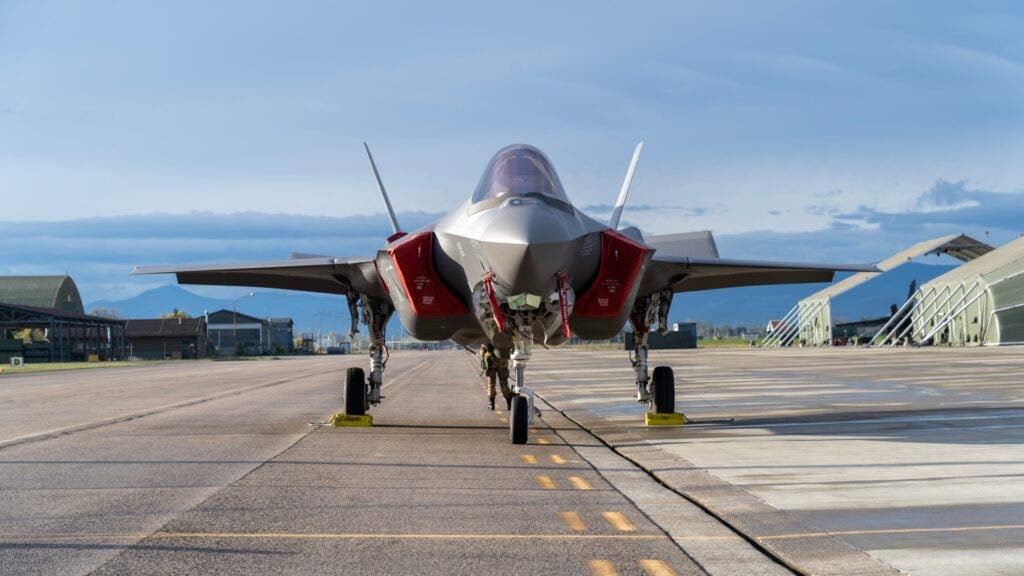
A Storm of Woes: Lockheed Martin’s Looming Crisis
Amidst a cacophony of operational failures, Lockheed Martin Corporation finds itself grappling with staggering financial repercussions. The company recently announced a jaw-dropping $1.8 billion in charges for the second quarter, starkly portraying the catastrophic fallout from its classified Aeronautics program and multiple Rotary and Mission Systems projects. These blunders, described by Bank of America Securities analyst Ronald J. Epstein, have driven the analyst to slash his outlook on the defense behemoth.
Market Reactions and Investor Discontent
The reverberations of these financial misfortunes extend well beyond the boardroom. Following this announcement, Epstein reaffirmed a Neutral rating, simultaneously slashing his price forecast from $495 to a mere $480. The rationale? Persistent challenges plague various programs, severely limiting prospects for near-term recovery. Such drastic price adjustments feed investor skepticism, breeding disappointment that clouds the potent legacy of Lockheed Martin.
Unpacking the Financial Catastrophe
These staggering write-offs include $950 million related to a classified Aero endeavor, $570 million attributed to Canada’s Maritime Helicopter Program, and another $95 million linked to Turkey’s utility helicopter project. The compounding impact of these charges—totaling a staggering $5.83 per share—has undeniably rattled investor confidence to its core.
Worse yet, supplementary hits such as a $66 million write-off associated with the Next Generation Air Dominance initiative and an obscure $103 million tax adjustment further muddy the waters, despite some relief from certain state tax benefits.
Glimmers of Hope Amid Chaos
Yet, nestled within this turmoil lies a flickering ember of hope. The Missiles and Fire Control (MFC) unit emerges as the sole pillar of strength, spotlighted by Epstein as the potential beacon for recovery. Programs that include the Long Range Anti-Ship Missile (LRASM), Joint Air-to-Surface Standoff Missile (JASSM), Patriot Advanced Capability-3 (PAC-3), and the Guided Multiple Launch Rocket System (GMLRS) continue to garner remarkable demand as the U.S. and its allies scramble to replenish depleted stockpiles.
Despite a promising backlog growth of 4% from 2024, and a whopping 25% over two years, supply chain bottlenecks frisk any hope of accelerating the segment’s recovery. The reality is stark: without significant production improvements, this bright spot remains dimmed by broader company-wide headwinds.
Outlook and Ongoing Risks
Looking ahead, Epstein’s adjusted expectations for Lockheed Martin’s earnings per share in 2025 have plummeted from $27.30 to a stark $21.95, with projections for 2026 and 2027 not far behind. Employing a conservative multiple analysis yields a price forecast capped at $480, an indicator that Lockheed Martin’s management must address escalating margin pressures and other tax-related obstacles to regain investor faith.
Epstein boldly outlines additional looming threats: a staggering potential $4.6 billion dispute with the IRS, coupled with ongoing execution challenges and budget concerns surrounding the highly scrutinized F-35 program. Though long-term demand remains optimistic for missile production, it’s evident that Lockheed Martin’s path to recovery is riddled with treacherous uncertainties.
Recent Contracts Amidst Financial Chaos
In an unexpected twist, Lockheed Martin announced securing a $720 million contract from the U.S. Army for the production of Joint Air-to-Ground Missiles (JAGM) and HELLFIRE missiles, a noteworthy commitment to bolster efforts amidst turbulent times. This award stands as a testament to the multifaceted clientele supported by Lockheed, including not just the U.S. Army and Navy but also international allies such as the United Kingdom, Poland, Spain, the Czech Republic, Italy, and Canada.
The stark juxtaposition between internal crises and external contracts highlights the complex dynamics at play within Lockheed Martin. While the prevailing sentiment may be one of caution, the evolving geopolitical landscape continues to supply a demand for defense capabilities that the company must adeptly navigate.
As Lockheed Martin continues to maneuver through this tumultuous period, the unfolding narrative remains closely watched by investors and industry analysts alike.
source: Benzinga.com
Source: finance.yahoo.com/news/big-trouble-lockheed-classified-program-162003903.html