Unmasking the Illusions of Retirement Comfort
The grand delusion persists: retire early at 62 and bask in the glory of a life well-prepared. But let’s confront the underlying reality here—many aren’t ready. Social Security benefits, calibrated for those who retire at 66 or 67, falter under these premature exits. Workers often underestimate the financial void awaiting them if they quit too soon, driven by a society obsessed with youthful detachment from responsibility.
What’s being sold as a way out is revealed as a fragile escape hatch. The truth is simple—without growth-focused investments, the dream of retiring “comfortably” at 62 turns into a mirage. And yet, promoters of so-called safe investments spotlight three stocks as the golden keys to this “chosen retirement age.” Let’s wrestle their claims apart.
PepsiCo: The “Safe Choice” with Strings Attached
Oh, the audacity of claiming this corporate monolith as a pillar for your retirement. PepsiCo is hailed for its “consistent growth” and “control of operations,” as though bottling its products in-house provides some magical insulation from an unpredictable world. Yes, it boasts a dividend streak lasting over five decades, but scratch beneath the glossy surface. This industrialized powerhouse isn’t banking on innovation or explosive sectors; it’s dragging its legacy structure through a constantly shifting market.
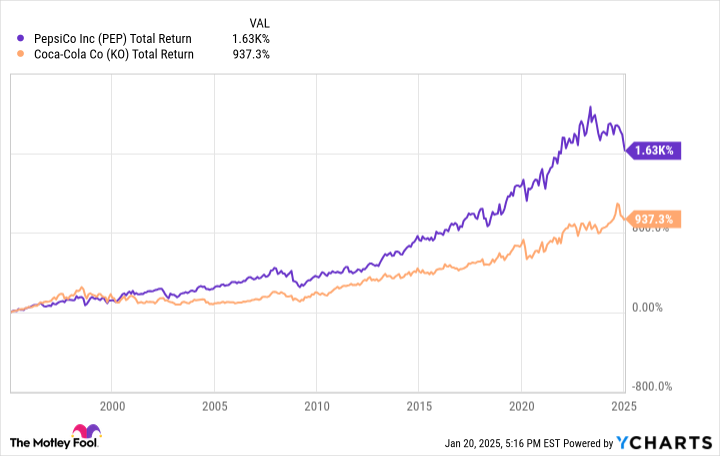
There’s no denying its returns outpace rival Coca-Cola if you’re into the game of dividends. But turning snack and soda profits into a financial lifeboat? That stretches the boundaries of reason. PepsiCo’s alleged superiority stems from aggressive stock buybacks, all very cute until the next market disruption hammers its overly standardized portfolio.
Amazon: The Cluttered Road to Wealth
Amazon—the all-consuming mammoth that dominates retail and cloud computing conversations. But should you place your retirement trust in a company balancing on two legs of cloud profits while using retail margins to drape confidence over its staggering girth?
The cloud computing arm, Amazon Web Services, rakes in a gob-smacking 60% of the company’s total operating income on a meager 17% of revenue share. Sure, the growth predictions for the sector sound enchanting. But this isn’t the winning lottery ticket it’s paraded as—it’s an exhausting race to keep ahead while smaller predators nip at its heels. With e-commerce’s profitability only now seeing some daylight, betting heavily on a retail platform that still struggles for market efficiency might be a delusion as vast as Amazon’s empire itself.
Wolfspeed: A Risk Hidden in Silicon Carbide
And now, the final player: Wolfspeed. Silicon carbide—a niche tech that’s caught intermittent waves of attention due to its role in electric vehicle tech and renewable energy systems. The promise? Explosive industry growth. The reality? A company wobbling through inconsistent revenue cycles caused by fluctuating demand and infancy in mass-market adaptation.
The long-term potential undoubtedly seduces the easily mesmerized. However, with manufacturers hesitating over costs, it’s a precarious dependency. Betting your retirement dreams on a mid-tier technology player is hardly an antidote to late-stage financial planning skepticism—it’s a leap into uncertainty masked as foresight.
Three Stocks, One Flawed Promise
The narrative is as bold as it is deceiving: a trifecta of stocks offering stability, growth, and comfort in early retirement. But the fine print drips with overconfidence. Will PepsiCo outpace the consumer fatigue against sugary drinks? Can Amazon resist competitive attacks while fattening its margins? Is Wolfspeed prepared to sustain high expectations before its silicon carbide technologies mature into normalized, predictable returns?
Such decisions could leave you stranded, realizing that the stocks meant to “_secure_” your retirement were speculative stunts dressed as safe bets. Relying on any corporate blueprint while sidestepping the broader financial system’s pitfalls is a misstep many will never recover from.
Source: finance.yahoo.com/news/average-american-retires-62-buying-081500785.html