Chip Titans on the Decline: A Brutal Start to 2025
Semiconductor stocks have seen better days. The supposed untouchable champions, Nvidia and AMD, are feeling the heat—quite literally. With Nvidia down 7% and AMD tumbling 17%, what’s happening to this dominantly hyped chip realm? It seems even these corporate titans couldn’t shield themselves from the pressures of Chinese start-up drama, relentless trade wars under President Trump’s policies, and investor overhype finally catching up to reality. Blink, and the semiconductor bubble might just implode.
TSMC: The Unsung Hero Crafting Giants’ Futures
Amid this chip chaos, Taiwan Semiconductor Manufacturing Company (TSMC) continues to rise above the fray. It’s not just another name in the semiconductor industry; it’s the entire backbone keeping this market breathing. While Nvidia and AMD enjoy fame for their groundbreaking architecture, TSMC silently builds—literally—the chips that power their success. Imagine Nvidia without TSMC; their “revolutionary” hardware remains nothing but impractical scribbles.
But here’s the delusion: Despite controlling almost two-thirds of the foundry market, TSMC barely grazes investor conversations. The fixation on big names overshadows this powerhouse, yet every step big tech takes is somehow intertwined with TSMC’s legacy. From collaborations with OpenAI to its delivery of custom silicon for Microsoft, Alphabet, or Meta, TSMC controls more dominoes than investors dare to see.
Revenue and Market Domination: A Machine That Just Won’t Stop
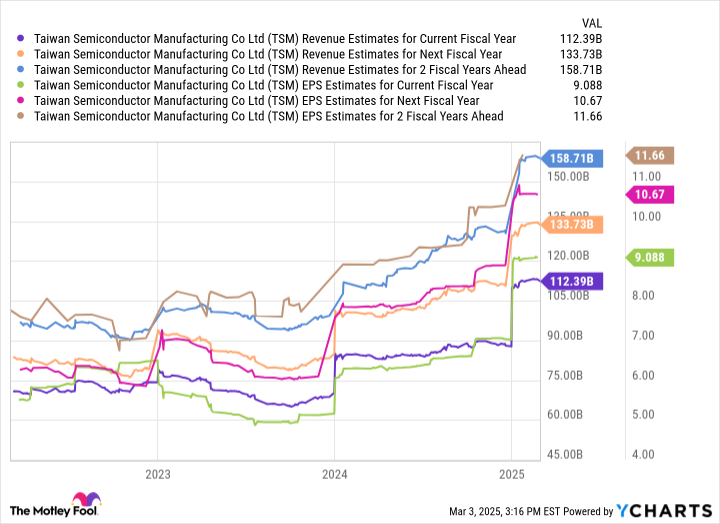
For a company that rakes in growing billions, you’d assume investors would be tripping over themselves to buy TSMC. Its revenue continues to soar while the AI revolution demands relentless manufacturing expertise. But no, fear-mongering around cyclical downturns or geopolitical nightmares is enough to make them flinch.
The facts? TSMC is diversifying faster than critics can moan. The $100 billion investment into U.S. manufacturing is a monumental move, slapping fears of Taiwan’s instability straight across the face. With AI alone projected to fuel over $300 billion in tech spending for 2025, TSMC’s grip over this evolving industry feels unshakable. Still, the ignorance surrounding its growth persists.
What Makes TSMC a Discounted Dominator?
The absurdity doesn’t stop there. At a forward price-to-earnings ratio of 19—lower than the S&P 500 average—it’s almost laughable how undervalued Taiwan Semi seems. Investors cling to perceived safety nets like the S&P 500, missing out on what might arguably be the most lucrative long-term prospect among chip stocks.
Imagine backing a company with proven resilience, a chokehold on one of the world’s most critical industries, and partnerships intertwining it with every tech giant’s future—but then ignoring it due to overinflated fears or short-term market jitters. It’s not bold investment; it’s downright negligence.
The Reality of Cycles and Geopolitics
Let’s dissect the so-called “risks.” Yes, the semiconductor industry is cyclical—but that’s only meaningful if chip demand slows down. It isn’t. Forecasts predict market expansion into a trillion-dollar industry, driven by AI and custom silicon like never before.
Then there’s the overplayed China-Taiwan narrative. It’s as if people forgot TSMC’s robust strategies, like relocating significant operations globally, stepping into markets outside Taiwan’s political borders, and fortifying its supply chains. Crises? TSMC seems too busy preparing to even acknowledge these apocalyptic predictions.
Conclusion Hidden in Reality
The tragedy here isn’t TSMC’s performance—it’s the ignorance surrounding it. From crafting the core of future AI ecosystems to dominating market shares, Taiwan Semi epitomizes an overlooked champion among struggling semiconductor stocks. Will the markets correct themselves and grant TSMC the respect it deserves? Or will investors stay blind to the goldmine at their feet, distracted by fleeting headlines and inflated fears?
Source: finance.yahoo.com/news/1-artificial-intelligence-ai-semiconductor-221500701.html