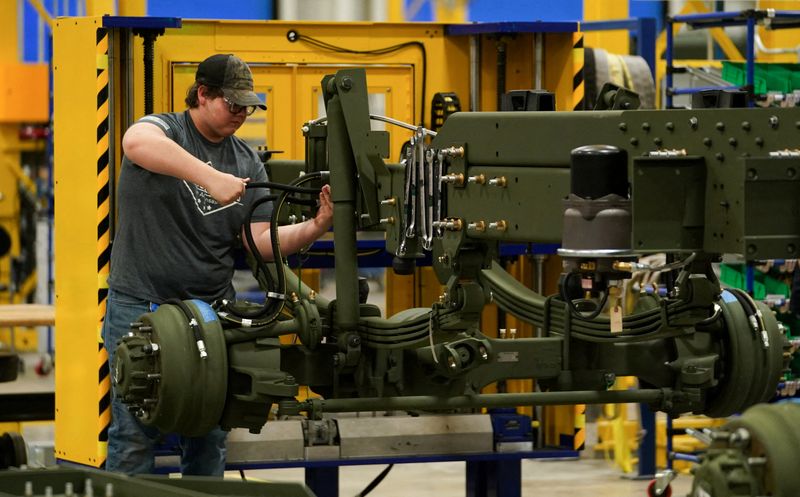
US Defense Contractors: Forecasts Amid Turmoil
The pillars of America’s defense sector are holding their ground, ignoring the seismic tremors emanating from trade wars and economic policies. Leading contractors, including Lockheed Martin and Northrop Grumman, have stuck to their 2025 financial projections, despite the economic chaos sparked by recent tariffs. This audacity reveals a confidence fueled by global weaponry demand amidst international conflicts.
Lockheed Martin, a universally recognized juggernaut in missile systems, touts resilience while others like RTX Corporation cautiously kneel under the weight of prospective $850 million profit blows. How long will this precarious balance hold?
The RTX Divide: A Cry of Concern
In a sea of optimism, RTX Corporation’s anxieties are a glaring outlier. With commercial aerospace businesses engulfed by possible levies, RTX’s struggle showcases the underbelly of a convoluted defense economy. Jet interiors and propulsion engines, once symbols of technological prowess, are becoming casualties of political chess games. Not even record-breaking sales figures can drown out the alarm bells tolling for RTX.
The Supply Chain Chasm: Shadows of a Greater Crisis
Tightened supply chains, strained to their last fibers, have become the achilles’ heel of high-complexity manufacturing sectors. Defense contractors now find themselves prisoners of escalating global trade spats. Are cost strategies enough to plaster over this abyss, or is the industry teetering on the edge of controlled chaos?
Global Conflicts: Buffer or Wrecking Ball?
The heightened demand for armament, driven by the fires of the Russian-Ukrainian war and conflicts brewing in the Middle East, appears to keep contractors afloat. The illusion? That these tensions can single-handedly secure industry vitality against growing economic headwinds. This balancing act raises questions about how long defense giants can lean on warfare-driven economics.
Beyond Borders: Allies Reconsider Their Options
Amid a political quagmire, allies like Canada and the European Union are reevaluating their reliance on U.S. defense equipment. As geopolitical lines become more fluid, new alliances and updated trade policies could chip away at the fortress of American defense dominance. The European Union’s ambitious self-sufficiency defense goals are another strike against U.S.-centric military strategies.
The Industry’s Internal Fractures
Even within U.S. borders, not all players are thriving. Northrop Grumman’s revelation of a 49% nosedive in profits emphasizes widening cracks. Blame is placed on ballooning costs in its B-21 stealth bomber program, but how deep does the root of the problem go? Meanwhile, Lockheed’s triumphant quarterly profits suggest a wider chasm forming between winners and losers in the sector.
RTX maintains a glimmer of hope through Collins Aerospace and Pratt & Whitney, whose impressive revenue rises serve as pillars in a crumbling temple. However, the decline in Raytheon’s defense arm highlights the truth: even a giant can bleed.
Political Influence: A Double-Edged Sword
Trump’s attempt to downplay export restrictions paints a mixed canvas. Does this boost the industry, or does it serve as a smokescreen for deeper trade policy implications? On the surface, increased defense budgets whisper promises of growth. Beneath, the cacophony of trade tensions and foreign allies’ abandonment screams impending crisis.
Defense Secretary Pete Hegseth’s belief in increased military budgets as salvation underlines a grim irony—continued political interventions might be as destructive as they are beneficial.
A Collision Course With Reality?
The U.S. defense sector stands as a metaphorical colossus, celebrated for its resilience. Yet, trade wars, strained supply chains, shifting allies, and internal cracks paint a darker reality. This industry, despite its confident exterior, cannot remain impervious to political games and global disruptions forever.
Source: finance.yahoo.com/news/us-defense-contractors-mostly-maintain-165551130.html