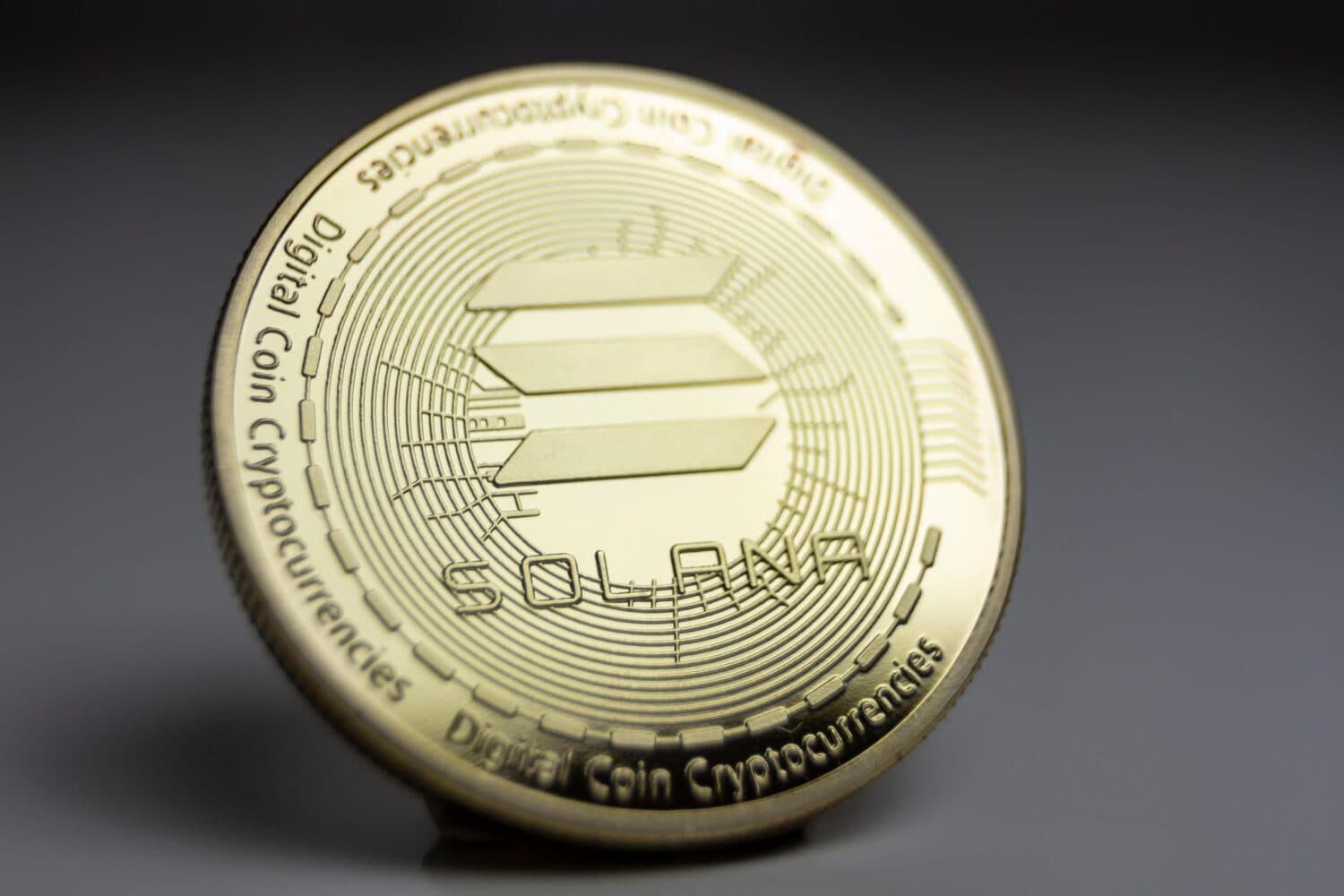
Solana’s Revenue Surge: A Challenge to Ethereum
In a major development, Solana (SOL) reported a staggering $2.85 billion in annual revenue driven by robust trading and network activities. This surge has positioned Solana at the forefront of the cryptocurrency market, especially as it enters 2026 with renewed growth potential and a surge in institutional interest spurred by recent ETF launches that attracted over $380 million in net inflows within just three weeks of their introduction.
Conversely, Ethereum (ETH) has witnessed significant declines, with its value dropping 45% from an August peak of approximately $4,950 to November lows around $2,700. As Solana capitalizes on its momentum, Ethereum’s economic engine shows signs of slowing, with a shift in activity towards competing Layer 2 networks.
Solana’s Record Revenue Reflects True Network Engagement
Solana’s impressive revenue figures are not merely speculative; they indicate substantial network usage. Almost half of its revenue emanates from trading and decentralized exchange (DEX) activities, while the remainder diversifies across NFT transactions, swaps, and priority fees. Even after a dramatic rise in memecoin trading in January, the network maintained monthly revenues averaging between $150-$250 million, evidencing consistent activity.
The Competitive Landscape: Solana vs. Ethereum
Solana and Ethereum are now catering to distinctly different markets, with Solana focusing on speed and accessibility while Ethereum is relying heavily on its security features and established institutional structures. Solana processes over 3 million daily active addresses, benefiting from low fees that encourage constant participation, compared to Ethereum’s high costs, which deter retail users from engaging directly on its mainnet, forcing many to rely on Layer 2 solutions.
Developer activity also favors Solana, as its ecosystem continues to flourish in realms such as gaming and consumer apps. Ethereum, while still housing a substantial developer community, distributes its talent across multiple Layer 2 solutions, diluting focused progress within its main ecosystem.
Institutional Interest on the Rise
The launch of Solana ETFs has marked a pivotal moment, enhancing institutional access. The initial U.S. spot Solana ETF, spearheaded by Bitwise, received $57 million on its first day, setting a record for ETF launches in 2025. This enthusiasm is echoed in Grayscale’s recent offerings, illustrating a newly opened avenue for traditional investors to engage with Solana, amplifying its attractiveness in comparison to Ethereum, where interest has slowed considerably.
Price Predictions for 2026: Optimism vs. Caution
Looking ahead, the forecasts for Solana indicate a bullish phase driven by expected improvements through its Firedancer update and increasing institutional participation. If these factors align, Solana could see its prices soar between $250-$340, while Ethereum may stabilize within $3,400-$3,800, barring any significant macroeconomic disruptions.
However, caution is warranted; any setbacks in Solana’s rollout or regulatory pressures on memecoins could adversely affect its burgeoning market. Similarly, if Ethereum’s Layer 2 fragmentation grows and undermines its revenue capture, its prices could retreat towards $2,600-$2,900.
As crypto environments evolve, the competition between Solana and Ethereum will become increasingly evident, redefining market dynamics and investor strategies.
Source: finance.yahoo.com/news/solana-2-85b-revenue-explosion-161931312.html