Political Inferno: South Korea’s Chaos Ignited
South Korea has been plunged into its most seismic political disaster in recent years, a grim tale of betrayal and mismanagement that has left the nation in shock. The arrest of President Yoon over a disastrous attempt at martial law is a headline that reeks of political incompetence and authoritarian ambition.
The embattled leader’s impeachment, following the chaos sparked by the botched enforcement of military rule, is a grim testament to how quickly democracy can falter under ill-conceived power plays. The attempt at suppressing turmoil with archaic means has thrown the nation into disarray, hinting at a deeper, long-standing mistrust between the government and its people.
Economic Despair Amidst Political Upheaval
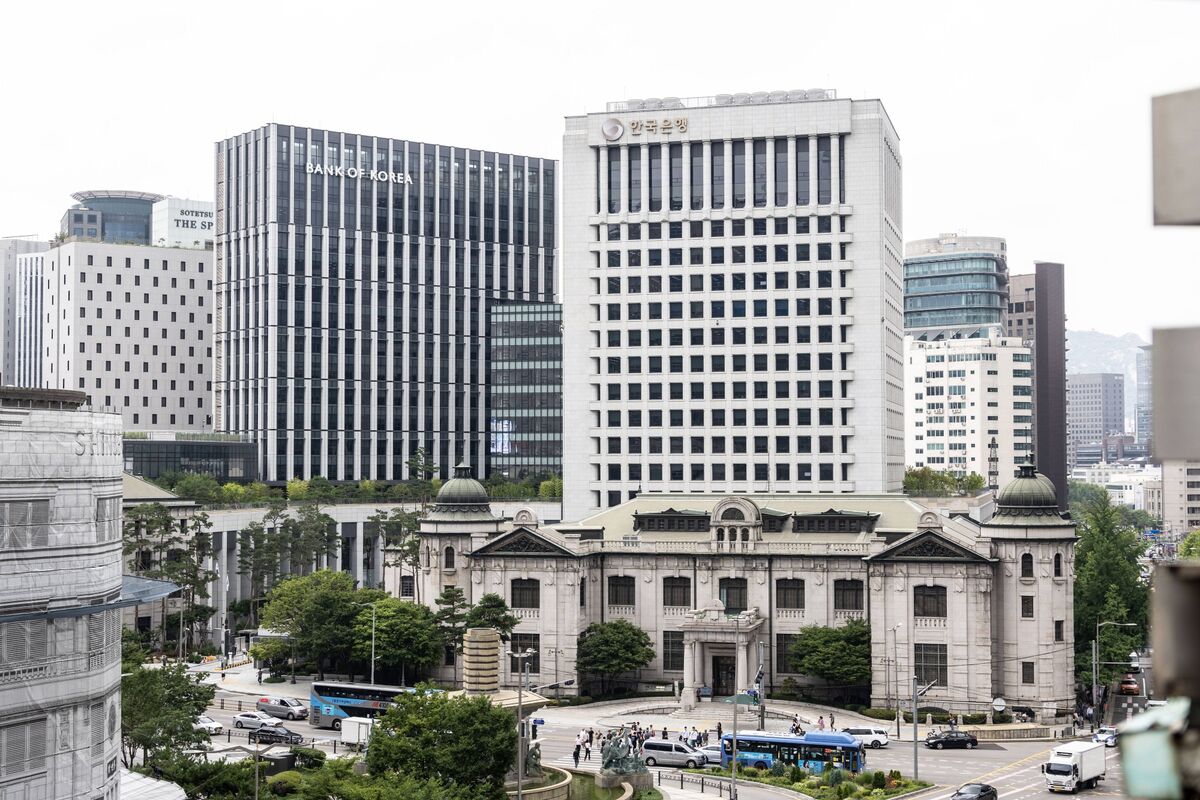
While the political battlefield scorched South Korea’s democratic fabric, its economy hasn’t emerged unscathed. The Bank of Korea now finds itself floundering within this quagmire. Talk of slashing benchmark interest rates yet again – a potential third consecutive cut – looms large. And for what? To plaster over the bleeding wounds that months of government incompetence and a recent catastrophic airline crash have inflicted. Eighteen of twenty-two economists polled expect this grim reality: a forecasted slide to 2.75% – the lowest since the global financial meltdown.
This spree of rate cuts isn’t some progressive economic strategy. It reeks of desperation, an attempt to scrape together stability amidst political decay. What’s at stake? The very foundation of South Korea’s financial stability, jeopardized by hasty decisions forced upon a battered monetary board. A potential disaster masquerading as a “necessary adjustment.” Ridiculous.
The Shadow of Military Rule Returns
Anyone who recalls South Korea’s tortured history under military regimes knows all too well the bitter stain of suppressive tactics. And here we are, decades later, witnessing a desperate government rekindling the chilling specter of martial law chaos. President Yoon’s gambit was not just a failure; it was a calamity of hubris, an ignorant nostalgia for control at the cost of South Korea’s democratic spine.
When a nation plunges backward into the authoritarian abyss, questions of accountability explode to the surface. And yet, the broader inquiry looms: how did South Korea, a beacon of modern democracy in East Asia, slide into this pit of chaos? The answer is as simple as it is damning – unchecked political arrogance and an insatiable hunger for power.
A Military-Economic Collision
The intertwining of political recklessness and economic uncertainty creates the perfect storm. A military impulse combined with dreadful governance has left trust in tatters. South Korea’s democratic institutions, built painstakingly over decades, now hang by the thinnest thread. Meanwhile, economic turmoil continues to wreak havoc, leaving policymakers in an unenviable chokehold as they deal with the aftermath of catastrophic events both natural and self-inflicted.
South Korea’s Fragile Democratic Fabric at Stake
With cracks spread across South Korea’s democratic veneer, the consequences of this chaos are far-reaching. The very experiment of South Korea’s rebirth as a post-military democracy feels like it teeters on the brink. The question remains: is the nation’s democracy resilient enough to withstand such brazen attempts to undermine it from within?
As the country waits for what comes next, the only certainty is this: South Korea faces a long and desolate road toward recovery – politically, economically, and socially. The players responsible for this nightmare might fade into obscurity, but the scars they’ve left offer no chance of fading.