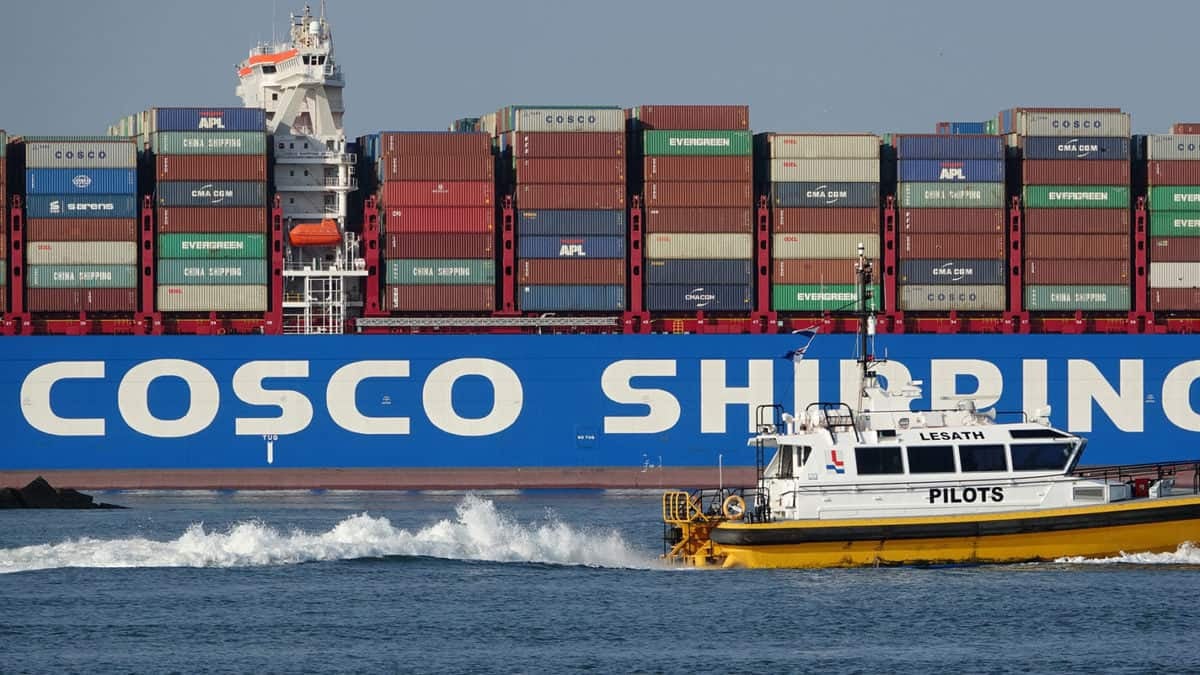
Massive Profits: The Unchecked Giant of Global Shipping
In an era when the global economy trembles under uncertainty, one colossus rises above all—the Chinese mega-entity Cosco Shipping Holdings. This is not just a company; it’s a titan that recorded an appalling operating revenue of $33.29 billion in 2024—a jaw-dropping 33.29% surge compared to the previous year. If such colossal dominance doesn’t raise eyebrows, then consider this: an EBIT of an unimaginable $9.79 billion. That’s a year-over-year profit spike of nearly 91%. And yet, beware of the hidden costs of this global shipping conquest. Blind admiration might just be the exact camouflage this entity thrives on.
The Ruthless Expansion of a Global Powerhouse
Behold, Cosco isn’t just any corporation; it’s the fourth-largest container carrier on the planet, embedding its claws into nearly every artery of international commerce. Net profits for this behemoth spiraled to $7.75 billion—a shadowing rise of 95%. Yet, the most alarming figure? A staggering 105.78% increase in net profit attributed to shareholders. This pillars a glaring new world order where money talks and colossal corporations command pathways unimpeded. However, the true cost is something the global market seems oblivious to—the strain on less-dominant competitors and the unavoidable monopolistic tendencies creeping into the corridors of trade.
Cost Shifts and Crisis Profiteering: The Price You Didn’t Know You Paid
Fueling Cosco’s intoxicating growth was not just “durable consumer demand” as headlines naively suggest, but earth-shattering events like the Red Sea crisis. How convenient! Ships rerouted on costly, longer voyages? Rates shot through the roof? And who absorbed those higher bills? Spoiler alert—it certainly wasn’t Cosco. This crisis profiteering disguised as operational efficiency is a masterclass in exploiting global chaos while masking it as innovation. The silence from stakeholders is deafening, and yet, this model thrives because scrutiny has seemingly retired into obscurity.
The U.S. Is No Ally, Nor a Threat… Just a Barrier
For all of Cosco’s global dominance, standing tall in this dystopic empire comes with thorns. The entity faces relentless hurdles in the United States. With increasing trade tariffs and proposed port penalties targeting Chinese vessels, Cosco’s operational expenses in the U.S. could balloon by tens of millions. Yet, as one observes these barriers, it also throws into question the alarming scale of influence companies like Cosco hold globally. Do these barriers even sufficiently obstruct the economic dominance of state-backed juggernauts like this, or are they mere window dressing for political theatrics?
The Puppet Show of Alliances: Ocean Alliance’s Role in Global Shipping Hegemony
When Cosco partners with entities like CMA CGM of France, Evergreen Marine of Taiwan, and its own subsidiary Orient Overseas Container Line (based in Hong Kong), it’s not an alliance—it’s a theatrical merger of calculated ambition. Together, the Ocean Alliance directs trade routes, dictates rates, and consolidates power, while everyone else remains too passive to interrupt this increasingly lopsided drama. A collaborative powerhouse like Ocean Alliance essentially governs shipping lanes, further suffocating competition and leaving global consumers powerless under their grip.
Global Trade or Monopoly? A Fine Line That’s Been Crossed
Trade is supposed to connect nations, foster diversity in supply, and create new opportunities. Yet, under Cosco’s shadow, trade feels less about mutual benefit and more about unilateral gains. The dominance magnified by these partnerships edges towards monopolistic behavior on a scale that many turn a blind eye to. When does an alliance like Ocean Alliance stop fostering trade and start dictating it? The distinction grows blurrier with every press release celebrating jaw-dropping profits at the cost of global competition and fairness.
Whose Interests Does This Titanic Serve?
Behind the numbers, the smiles at shareholder meetings, and the strategic expansions lies a truth scarcely whispered in boardrooms worldwide—unbalanced power in global trade is a double-edged sword. On one hand, Cosco brings unprecedented connectivity, yet on the other, it also raises dangerous questions about equitable access to trade routes and fair markets. When does the unchecked rise of such titans turn from a story of operational triumph into a dark lesson about global vulnerability?
Source: finance.yahoo.com/news/china-largest-shipping-line-sees-214910027.html