The Mar-a-Lago Accord: A New Threat to Global Stability
In an audacious twist of economic strategy, rumors circulate about a so-called “Mar-a-Lago Accord,” a radical concept that could threaten to tear apart the global financial order. With all the subtlety of a wrecking ball, this “accord” spins around an idea of converting U.S. Treasury debt into ultra long-term bonds, a move that aims to ease America’s escalating debt burden. And who could be bold—or reckless—enough to entertain such notions? None other than Donald Trump, the very definition of a political disruptor.
The mere suggestion of this concept has already sent ripples through financial circles, igniting fervent discussion among analysts, economists, and strategists. Jim Bianco, a veteran of market analysis and founder of Bianco Research, doesn’t even assert this improbable scheme will materialize. But really, the potential for chaos is reason enough to pay attention. If these plans were to gain traction, from debt restructuring to weakening the dollar and slashing borrowing costs, every stone of economic stability could be upended.
A Sovereign Wealth Fund and Shifting the Burden
To add a larger boulder to the already collapsing structure, Trump’s agenda reportedly includes creating a sovereign wealth fund—a clear move to consolidate financial power in unprecedented ways. And it doesn’t end there. The plan brazenly aims to strong-arm America’s allies into paying more for security, pooling all resources while the U.S. sheds more responsibility. Bold? Yes. Balanced? Not even close.
Bianco laid this out during a webinar, describing the move not as a literal “accord” but as an earth-shaking blueprint to reshape global finance. Labeling it a concept might downplay the potential shock, but the implications remain staggering. Drawing comparisons to cornerstone moments like the Plaza Accord of 1985 and Bretton Woods Agreement of 1944, the Mar-a-Lago Accord takes an unprecedented leap into manipulative global strategy.
The Dangerous Dance with Dollar Valuation
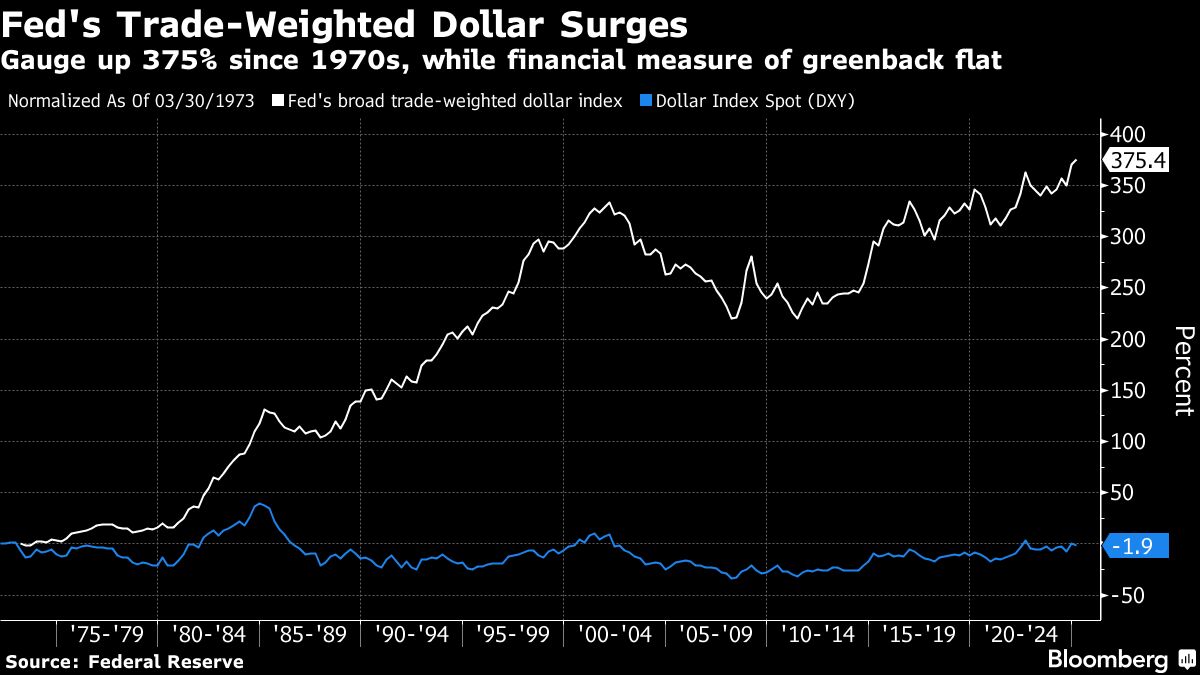
Central to these visions of reform is the aggressive devaluation of the dollar. Trump’s economic spokesman, Stephen Miran, openly declared war on global trade imbalances, claiming dollar overvaluation has crippled industries in the U.S. for decades. Yet, this supposed “fix” presents a double-edged sword. Weakening the dollar for trade while inadvertently boosting financial benchmarks like the Bloomberg Dollar Spot Index—currently up 2.3% post-election—is a recipe for international mayhem.
Let us not forget Treasury Secretary Scott Bessent’s declaration that “the U.S. stands by its strong dollar policy.” If that smells like a contradiction, it’s because it is. Miran’s paper and the actions at hand leave no room for harmonious policies; they only offer a battleground where financial allies turn into economic rivals.
Bretton Woods III and the Pozsar Theory
The whispers of a Bretton Woods III make their way into this saga, with echoes from former Credit Suisse strategist Zoltan Pozsar. His theory argues for the reduction of the dollar’s dominance—a thought Trump’s administration seems too eager to explore. The theory even toys with absurd alternatives, like forcing foreign nations to swap their Treasuries into non-tradable 100-year bonds. The excuse? Pay the U.S. more for its supposed “security apparatus.”
Will this ever happen? It’s unlikely. But the audacity behind even proposing such tectonic shifts underscores the level of recklessness at play here. The world’s reserve currency could morph into an unpredictable mess that threatens global stability, destabilizing allies and eroding trust. Yet, while bond markets remain calm for now, this deceptive tranquility offers no guarantees.
“Blow Up NATO? Why Not Blow Up Finance?”
Jim Bianco, never one to mince words, summed this grandiose strategy with chilling clarity: “If Trump is willing to blow up NATO, why wouldn’t he blow up the financial system?” Rife with contradictions, the potential devastation in play extends far beyond America’s borders. The debt-swapping idea might remain theoretical, but its impact has already brewed a storm of uncertainty on Wall Street.
So, while this so-called Mar-a-Lago Accord remains a concept more than policy, the warning signals couldn’t be more glaring. One must wonder: is this a calculated risk or an outright gamble with the future of global finance?
Source: finance.yahoo.com/news/mar-lago-accord-chatter-getting-220205293.html