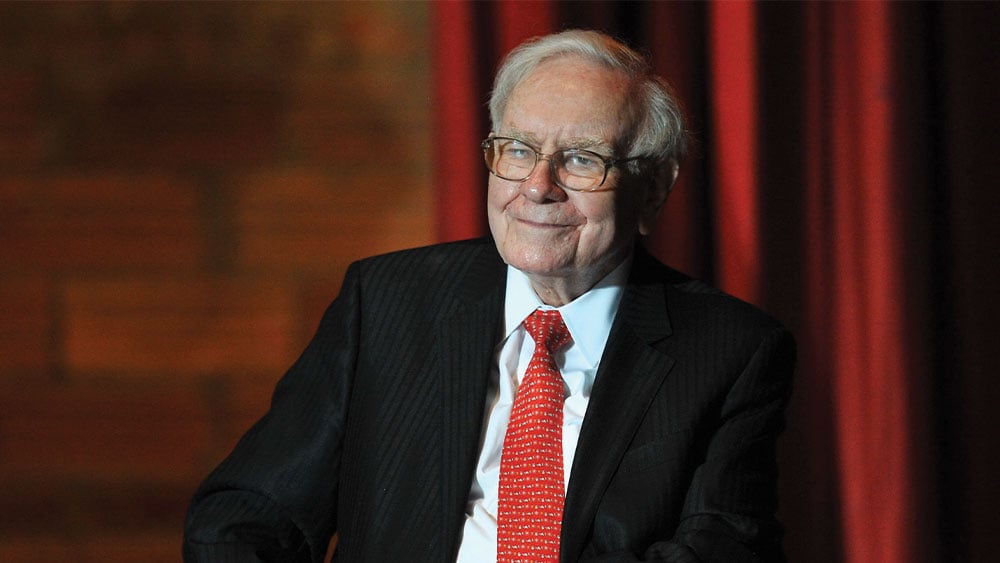
A Powerhouse Unraveled: Warren Buffett’s Reputation Under Siege
Warren Buffett, a name synonymous with financial wizardry and billionaire status, has carried the aura of infallibility in the world of investing for decades. But even the Oracle of Omaha couldn’t dodge the harsh glare of raw statistical truth that reveals he’s no longer the king of the S&P 500 in the long game. Yes, you read that right. Fasten your seat belts, because the world of investment giants has a new narrative.
S&P 500 Titans: Crushing Buffett’s Long-Term Legacy
Let’s talk about the dozen S&P 500 stocks that didn’t just outperform Berkshire Hathaway—they obliterated its track record. Leading the rebellion is Amgen, the biotech behemoth, with an astronomical 255,943% growth since 1985. That’s 22% compounded annually, leaving Berkshire’s 44,406% return choking on the dust of mediocrity.
Apple, another glaring example, didn’t just revolutionize technology; it redefined what astronomical growth looks like. A dizzying 205,918% return—or 21% annually compounded—makes even the Oracle’s compounded 16% look pedestrian. Sure, Berkshire has bragged about its returns, but this reality check reduces those laurels to dried twigs.
The Hypocrisy Behind Apple as Buffett’s Pride
What’s more nauseating than Buffett’s fanbase brushing this slap down under the rug is his own admission of Apple’s contribution to his empire. Yes, the very company that overshadows his investment returns has ironically been a crown jewel in Berkshire’s portfolio. Do you hear that sound? It’s the crash of a leader’s hypocrisy exposed in plain sight.
Amgen: The Undisputed Victor
Amgen, the biotech force headquartered in sunny California, didn’t just make gains. It bulldozed the competition with a staggering RS Rating during its earlier days. The numbers don’t lie—this company’s 255,943% gain and once dazzling double-digit earnings growth cement its place in history. The irony is clear: legacy and age have dulled its glow, yet it remains untouchable by Buffett’s numbers.
S&P 500 Warriors That Dethroned the King
Amgen and Apple aren’t alone in reshaping the scoreboard. Stryker Corporation, another health care juggernaut, clinched a shocking 96,244% growth. Meanwhile, Home Depot delivered a mind-blowing 91,463%. The likes of Danaher and Progressive roared with multiple tens of thousands of percentage returns, bringing Buffett’s once-imperial crown to a humbling level.
And here’s something sweeter for those who relish irony: Texas Pacific Land, a lesser-sung story, decimated expectations with an unrelenting 63,337% rise. Buffett’s numbers, in contrast, struggle to look more than ordinary when stacked next to these results. Welcome to the new world where S&P giants no longer play second fiddle.
Berkshire’s Legacy in Tatters
For decades, phrases like “invest like Buffett” dominated finance vernacular, but those days are vanishing in light of harsh numbers that demand attention. Berkshire Hathaway’s gains—by any historic measure—are no slouch. But being second or third place no longer cuts it in a hyper-analyzed era forcing even demigods to prove their worth.
The So-Called Buffett Beaters: More Than Just Amgen and Apple
This isn’t merely a story of Amgen or Apple wiping the floor with Berkshire. S&P Global Market Intelligence reveals an elite list: Applied Materials delivered 76,755% gains, Paychex added 73,203%, and Williams-Sonoma gleefully crushed barriers with a 69,878% return. It’s as if the “value investing” kingship preached by Buffett has become a relic of a bygone era, overshadowed by faster, more aggressive strategies.
The Stark Reality for Berkshire Enthusiasts
Loyalists would like to cling to Buffett’s exit at the end of 2025 as the “end of an era,” but the fact remains: that era has already been surpassed. Nostalgia and admiration may keep the myth alive, but hard figures shouldn’t allow anyone—no matter how legendary—an unchallenged pedestal in modern-day markets.
Buffett’s departure will undoubtedly spark reflection, pride… and denial. But perhaps this marks an overdue moment to reframe the narrative. Celebrating resilience is fine. Worshiping an outdated model? That’s no longer relevant.